How to Potty Train a Small-Breed Puppy: A Schedule That Actually Works
Small dogs have small bladders, and that changes how house training works. A realistic potty training schedule for French Bulldog, Cavapoo and Poodle puppies, covering timings by age, pads versus outdoors, nights, apartments, accidents and the regressions nobody warns you about.
Small breeds have a reputation for being "hard to house train." Mostly that's unfair. A Toy Poodle's bladder is about the size of a walnut, so it simply can't wait as long as a Labrador can. And small accidents are easy to miss, so they never get corrected. Once you plan around those two facts, small puppies learn as well as big ones.
This is the method we give our families. It builds on our first week home plan and takes you through to a reliably trained dog.
The one rule underneath everything
Prevent accidents rather than correcting them. Every time a puppy goes in the right place and gets rewarded, that habit gets stronger. Every time it goes on the rug unnoticed, the rug becomes a toilet. Potty training is really about arranging the day so the puppy is almost always in the right place when it needs to go.
That takes three things: a schedule, supervision and confinement when you can't supervise.
How long can a puppy hold it?
A common rule of thumb is the puppy's age in months, plus one, in hours. For small breeds, treat that as the maximum during the day, not the target.
| Age | Rough daytime maximum | Realistic for a toy-size puppy |
|---|---|---|
| 8–10 weeks | 2–3 hours | 1–2 hours |
| 3 months | 4 hours | 2–3 hours |
| 4 months | 5 hours | 3–4 hours |
| 6 months | Up to 7 hours | 4–6 hours |
Puppies also need to go within minutes of waking up, eating, drinking, playing hard or getting excited. That's when most accidents happen, not after a long gap.
A daily schedule for an 8–12 week puppy
Adjust the times to fit your household. Keep the pattern the same.
- 6:30 Out the moment the puppy wakes. Carry it, because it may not make it to the door.
- 6:45 Breakfast, then out again within 10–15 minutes.
- 7:15 Play and training, then out.
- 8:00 Nap in the crate or pen.
- 9:30 Out on waking, then play.
- 11:30 Lunch, then out.
- Then out every 1–2 hours, and after every nap, meal and play session, until the evening.
- 5:30 Dinner, then out. Pick up the water bowl about two hours before bed.
- 10:30 Last trip out, then bed.
- Overnight: expect one trip out at around 2–4 am for the first few weeks.
Write it down. A simple log of when your puppy went, and where, shows you its natural rhythm within a few days. Then you can get ahead of it.
How to do a toilet trip properly
- Go to the same spot every time. The smell is a cue.
- Use a lead, even in your own yard, so the puppy can't wander off and get distracted.
- Stand still and stay quiet. Say a cue word ("be quick," "go potty") as it starts to go, so it learns to go on cue later.
- Reward within two seconds of it finishing, outside, at the spot, with a tiny treat and calm praise. A reward handed out back in the kitchen teaches nothing.
- No result after five minutes? Back inside to the crate or pen for 10–15 minutes, then try again. Don't let an "empty" puppy roam the house.
- After a success, give a little freedom in the room with you, supervised. That freedom is a reward too.
Signs your puppy needs to go
Sniffing the floor in circles, suddenly wandering off, whining, heading to a spot where it had an accident before, or stopping play abruptly. In small puppies these signs can last two or three seconds. If you see one, pick the puppy up and go.
Pads, turf or outdoors?
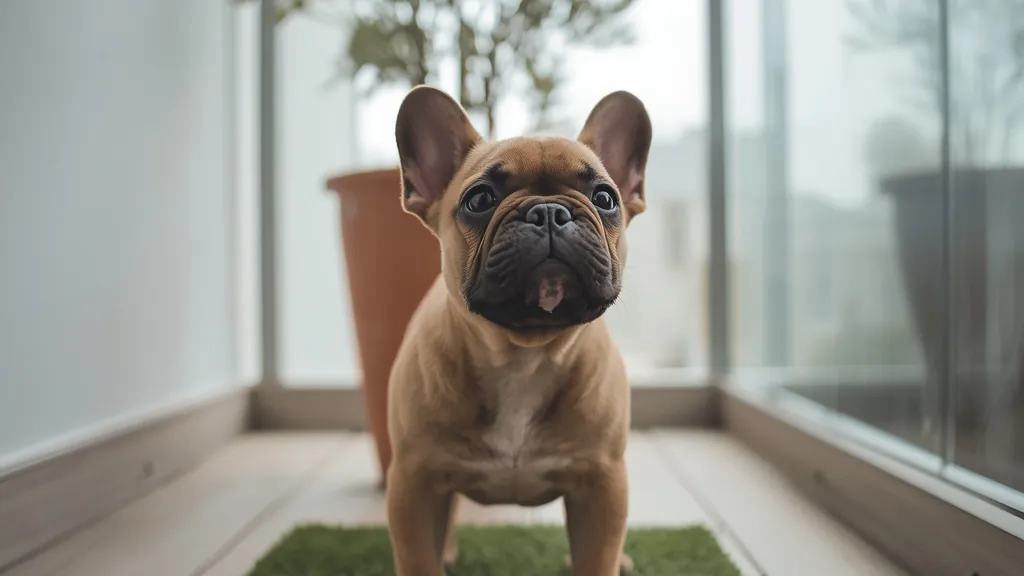
The best long-term answer for most dogs is outdoors. But small breeds in apartments, very cold winters or high-rise buildings often do better with a two-place system. That means an indoor toilet for nights and bad weather, and outdoors the rest of the time.
- Artificial turf trays work better than paper pads for most puppies. The surface feels like grass, so the habit carries over to outdoors.
- Pads are fine, but some puppies learn "anything soft and flat on the floor," which can include bath mats and rugs.
- Never put the indoor toilet next to the bed or food. Dogs don't like to soil where they eat and sleep, which is exactly why crate training works.
- Pick one plan and stick to it for the first months. Switching back and forth confuses puppies more than either choice.
If you live in an apartment, our guide to the best small dogs for apartment living covers the stairs, elevators and night-time trips.
The crate, used properly
A crate works because most puppies avoid soiling their own bed. It only works if:
- It's the right size. There should be room to stand, turn and lie down, and no more. Too much room means one end becomes the toilet. Use a divider for a growing puppy.
- It's a happy place. Meals, chews and naps go in the crate. It's never a punishment.
- The time is realistic. A 10-week-old puppy shouldn't be crated for longer than it can hold its bladder. For longer absences, use a pen with a toilet area. Our post on how long a puppy can be left alone explains how to plan this.
Nights
- Crate beside your bed at first, so you hear it stir.
- Take the puppy out last thing, and again for the one overnight trip without play, lights or chat. Toilet, then straight back to bed.
- Most small-breed puppies sleep through, about 6–7 hours, somewhere between 12 and 16 weeks. Toy breeds can take a little longer.
When accidents happen
They will. Here's what to do:
- Caught in the act? Calmly interrupt, with a clap or "oops," and carry the puppy outside to finish. Reward if it does.
- Found it afterwards? Say nothing and clean it up. Puppies can't connect a telling-off to something they did ten minutes ago. Scolding mostly teaches them to hide from you when they need to go, which makes training harder.
- Use an enzyme cleaner. Ordinary sprays leave a smell the puppy can still detect, which marks the spot as a toilet. Avoid ammonia-based cleaners. Urine contains ammonia, so they make the smell worse.
- Two accidents in a day? That's a sign to tighten the schedule and supervision, not that the puppy is "being stubborn."
Breed notes
- French Bulldogs are usually quick learners and dislike rain and cold. A covered toilet spot helps. In hot weather, keep trips short and in the shade. Our post on French Bulldogs in hot states explains why heat is a real risk.
- Cavapoos are eager to please and respond well to rewards. They can also wet when excited, especially when greeting people. That's not a training problem. Keep greetings calm and low to the ground, and most grow out of it.
- Toy and Miniature Poodles learn fast. Toy Poodles need the most frequent trips of any of our breeds, and their small accidents are easy to miss on patterned rugs. Roll the rugs up for the first few months.
How long it really takes
Most small-breed puppies are mostly reliable by 4–6 months and fully reliable by 6–9 months. Expect two common setbacks:
- A regression at 4–6 months, around teething and the first adolescent burst of independence. Go back to the schedule for two weeks.
- Marking in young males, often at 6–9 months. Neutering timing, a calm routine and supervision all help. Our male or female post covers the difference between the sexes.
Talk to your vet if a puppy that was doing well suddenly has lots of accidents, strains, drinks much more than usual or has blood in its urine. A urinary tract infection is common in puppies, easily treated and often mistaken for a "training problem."
The short checklist
- Out after waking, eating, drinking, playing and excitement
- Same spot, on a lead, reward within two seconds
- Crate or pen whenever you can't watch
- Enzyme cleaner, no scolding
- A written log for the first two weeks
- One indoor and outdoor plan, kept consistent
Choosing a puppy for an apartment or a busy home? Our breed comparison puts the three side by side, and the puppies below are available now.